

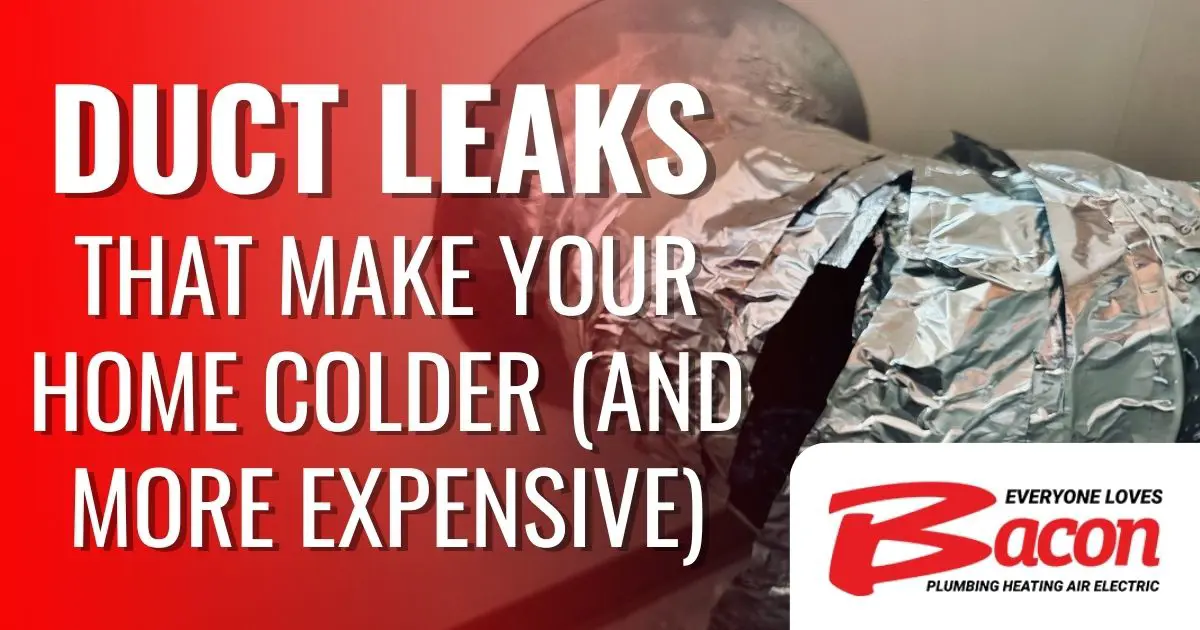
Have you noticed certain rooms in your home staying stuffy while others feel perfectly comfortable? Maybe your energy bills have been climbing even though you haven't changed your thermostat settings. The culprit might be hiding in plain sight—or rather, out of sight—in your air ducts. Leaky ductwork silently drains your wallet and your comfort, forcing your heating and cooling system to work overtime while rooms stay too hot or too cold.
Don't let leaky ducts drain your wallet another day. Call (972) 645-2738 or fill out our online contact form to schedule a duct inspection with Bacon Plumbing Heating Air Electric today.
What Happens When Your Ducts Leak
Your ductwork acts like a highway system for conditioned air, carrying warm or cool air from your HVAC unit to every room in your home. When leaks develop in these ducts, that carefully heated or cooled air escapes into attics, crawl spaces, and walls instead of reaching your living areas. According to the U.S. Department of Energy, a typical home loses 20 to 30 percent of the air moving through duct systems due to leaks, holes, and poorly connected ducts.
Think of it like paying for groceries but leaving a third of them in the parking lot. You're spending money on heating and cooling that never makes it to where you need it. Your system runs longer cycles trying to reach the temperature you set, which means higher energy consumption and increased wear on your equipment.
Signs Your Ducts Are Leaking Air
Spotting duct leaks early can save you hundreds of dollars annually on energy costs. Watch for these common warning signs around your Greater Dallas-Fort Worth or Houston home:
- Uneven temperatures: Some rooms feel like saunas while others feel like refrigerators, no matter how you adjust the thermostat
- Dusty surfaces: You're dusting more often than usual because gaps in your ductwork are pulling in dirt and debris from unconditioned spaces
- High energy bills: Your utility costs keep rising even though your usage habits haven't changed
- Weak airflow: Some vents barely push out any air while others blast at full force
- Excessive system runtime: Your heating or cooling equipment seems to run constantly without reaching the desired temperature
If you've noticed one or more of these issues, your ductwork deserves a closer look. These symptoms don't just signal wasted energy—they also indicate your indoor air quality may be compromised.
Where Duct Leaks Typically Develop
Understanding where leaks commonly occur helps you recognize potential problem areas in your home. Most duct leaks happen at connection points where sections of ductwork meet. Over time, the sealing tape or mastic used at these joints deteriorates due to temperature fluctuations, vibrations from the HVAC system, and general aging.
Return ducts—the ones that pull air back to your system for reconditioning—are particularly prone to leaks. When these ducts leak, they can draw in hot attic air during summer or cold air during winter, forcing your system to work harder. Supply ducts that carry conditioned air to your rooms also develop leaks, especially in long runs through unconditioned spaces like attics.
Flexible ducts are vulnerable to damage from pests, improper installation, or being compressed under insulation. Even small tears or disconnections in flex duct can significantly impact system efficiency. In older homes, metal ductwork may have corroded sections or gaps that have widened over the years.
The True Cost of Leaky Ductwork
The financial impact of duct leaks extends beyond your monthly utility bill. When your HVAC services have to compensate for lost air, the increased runtime leads to more frequent repairs and shorter equipment lifespan. Components like blowers, compressors, and heat exchangers wear out faster when they operate continuously.
Consider this: if your ducts are losing 25 percent of conditioned air, you're essentially throwing away a quarter of every dollar you spend on heating and cooling. For a home spending $200 monthly on energy, that's $50 lost every single month—$600 annually—just floating into your attic or crawl space.
Beyond direct costs, leaky ducts create comfort issues that affect your quality of life. Hot spots, cold spots, and humidity problems make your home less enjoyable. Some family members may constantly feel uncomfortable, leading to thermostat battles and frustration.
How Professional Duct Sealing Works
Professional duct sealing involves more than slapping tape on visible gaps. A thorough inspection identifies all leak points throughout your system, including areas you can't easily access. Technicians use specialized tools to measure air pressure and flow, pinpointing exactly where air is escaping.
The sealing process typically includes:
- System assessment: Evaluating the overall condition of your ductwork and measuring current efficiency levels
- Leak detection: Using pressure tests and visual inspections to locate all leak points
- Proper sealing: Applying mastic sealant or metal-backed tape to seal gaps and holes permanently
- Insulation check: Ensuring ducts in unconditioned spaces have adequate insulation to prevent energy loss
- Final testing: Verifying the repairs have improved system performance and efficiency
Professional sealing addresses both obvious and hidden leaks throughout your entire duct system. This comprehensive approach delivers better results than DIY attempts, which often miss critical leak points in inaccessible areas.
Prevention and Maintenance Tips
While professional sealing handles existing leaks, you can take steps to prevent future problems. Regular HVAC maintenance includes visual duct inspections that can catch small issues before they become major efficiency drains. Changing your air filters on schedule reduces strain on your ductwork from restricted airflow.
Keep attic insulation away from flexible ducts to prevent compression. Inspect any visible ductwork periodically for damage, especially after severe weather or if you've had pest problems. If you're planning home renovations that involve attic or crawl space work, ask contractors to be mindful of existing ductwork.
Consider scheduling a professional duct inspection every few years, even if you haven't noticed obvious problems. Early detection of minor leaks prevents them from expanding into costly issues.
Ready to Stop Wasting Money on Leaky Ducts?
Your home deserves to be comfortable without breaking the bank. If you've been dealing with uneven temperatures, rising energy bills, or an HVAC system that never seems to rest, leaky ductwork could be the problem. Bacon Plumbing Heating Air Electric serves homeowners throughout Greater Dallas-Fort Worth and Houston with expert duct sealing services that can help you reclaim comfort and cut energy waste.
Call (972) 645-2738 or contact us online to schedule your duct evaluation and start saving today.
